Registered Chinese name杭州市余杭区海创人形机器人产业创新中心HANGZHOU ROBOTICS INNOVATION CENTER
Hangzhou Haichuang Humanoid Robot Industry Innovation Center was established in August 2024. It is a major scientific and technological innovation platform in the field of robotics…
Hangzhou Haichuang Humanoid Robot Industry Innovation Center was established in August 2024. It is a major scientific and technological innovation platform in the field of robotics jointly supported by Zhejiang University and Yuhang District of Hangzhou City. Committed to promoting robot technology innovation and industrial development through institutional and mechanism innovation. Focusing on key technologies such as robot brains, intelligent mobile platforms, and dexterous working arms (arms), it focuses on medical care, entertainment and other fields, and has formed many achievements such as robot scene brains, Panda robots, robot bands, and table tennis robots.
In the future, the innovation center will accelerate the in-depth integration of the scientific research system and the industrial system, strive to create a globally influential source of innovation in robotics technology and an industrial cluster, and contribute to the vision of "making robots better serve mankind".
02
MAIN PRODUCTS
Key Products
04 ITEMS
01
Boundless navigation robot
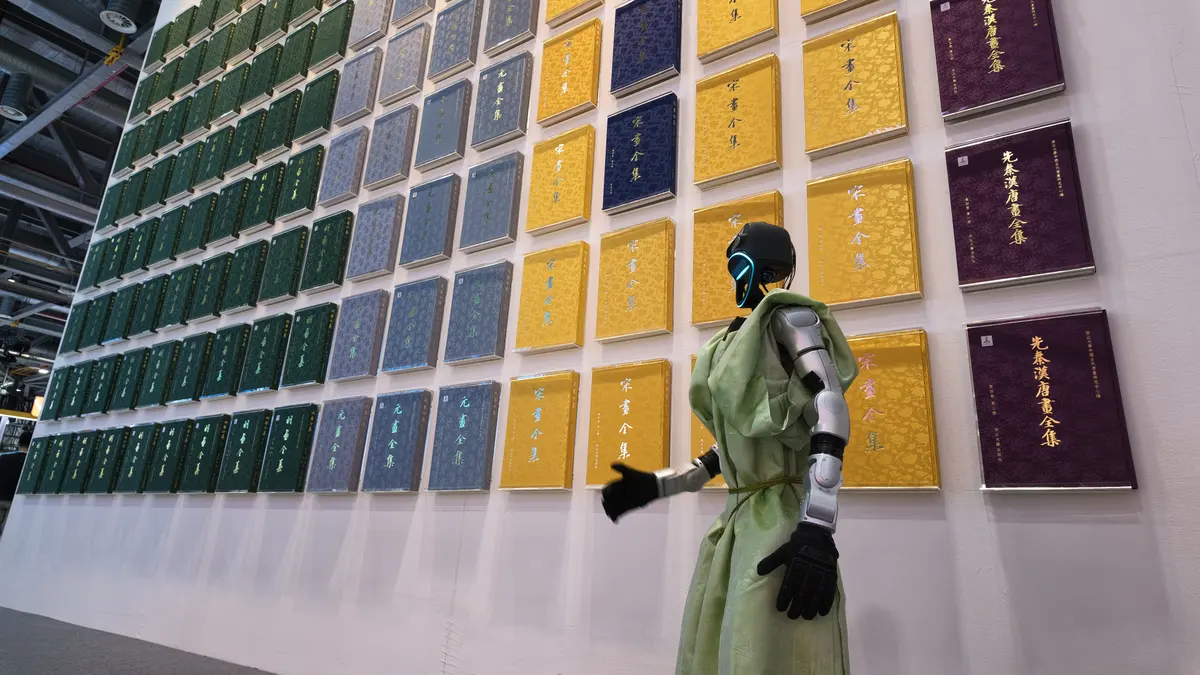
The Wuji guide robot is a humanoid intelligent guide robot for museums, exhibition halls, and exhibition hall scenes. Driven by the self-developed "Boundless Brain", it adopts VLLA architecture. It has six major functions: intelligent explanation, free Q&A, multi-language service, autonomous guidance, flexible access, and exhibition hall linkage: the explanation is natural and smooth, the audience can interrupt questions at any time, and automatically continue the lecture after answering; multi-lingual directly accepts foreign-related receptions; independently plans the tour route and dynamically adjusts it; the bipedal body can flexibly pass through ramps and other terrains; it can also be linked with lighting, PPT and other equipment to allow the entire audience to perform collaboratively. It is currently running regularly in the real exhibition hall.
02
Agile mobile platform (robot)
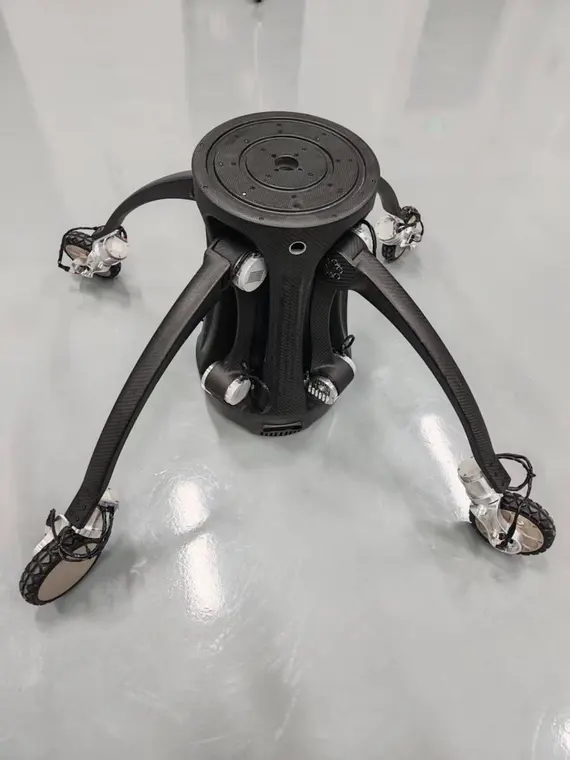
The whole machine adopts a bionic design, integrating dual modes of wheeled high-speed movement + footed obstacle climbing, with a maximum speed of 10m/s. It is equipped with depth cameras, RGB cameras and other sensors, making it extremely compact. After folding, the projection of the whole machine is less than 52cm in diameter. , elevators, indoor corridors, small machine rooms, and underground pipe corridors are all barrier-free, and omnidirectional wheeled movement can be achieved without unfolding, reducing energy consumption; three movement modes can be switched: high-speed wheeling, foot-type obstacle crossing, crawling and ground-traveling, and self-adaptation to steps, ravines, and high-low road surfaces. Mechanical and electrical interfaces are reserved to carry different mission loads according to different tasks.
03
Four-legged inspection robot
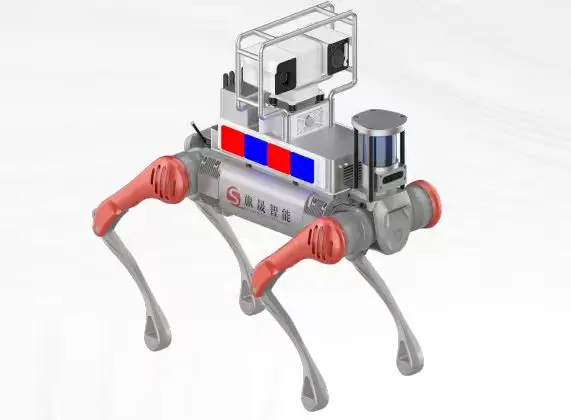
It has functions such as miniaturization, gas monitoring, video monitoring, and AI recognition. The four-legged chassis can be used in complex outdoor working conditions, such as outdoor power stations, parks, and public security patrols. It is equipped with 3D lidar and integrates self-developed positioning and navigation algorithms, allowing the robot to realize autonomous path planning and obstacle avoidance in dynamic scenes. The navigation accuracy reaches ±15mm, ensuring patrol inspections without blind spots in the entire scene. Through the real-time detection and abnormal alarm functions of the integrated PTZ real-time scene video, potential problems can be discovered in time, effectively reducing the possibility of missed detections and false detections, and reducing labor costs and safety risks.
04
Intelligent meal assistance robot
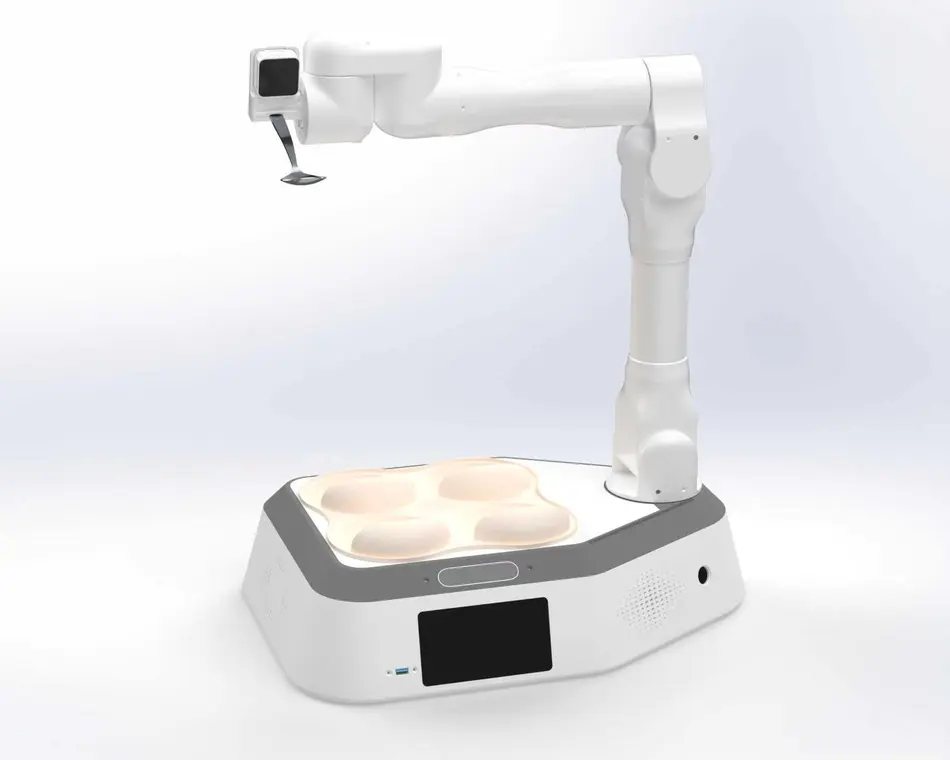
It is mainly aimed at the elderly, patients and disabled people who have difficulty eating independently, and also helps caregivers reduce repeated feeding work. The robot integrates a six-degree-of-freedom robotic arm, a divided plate, visual recognition and a variety of interactive modules. It can identify different meals, automatically pick up meals according to user selections, and follow the mouth position to deliver the food smoothly to the mouth. It can be operated by voice, touch screen or facial movements. In view of the actual situations such as the large variety of Chinese food, the large differences in shapes, and the movement of the head when eating, the system uses technologies such as visual tracking, dynamic path adjustment, compliance control, and abnormal stop to improve the adaptability and safety of food delivery.
HANGZHOU ROBOTICS INNOVATION CENTER | Company Profile & Products | WRC 2026