Beijing Institute for General Artificial Intelligence
Registered Chinese name北京通用人工智能研究院Beijing Institute for General Artificial Intelligence
Beijing General Artificial Intelligence Research Institute (hereinafter referred to as "General Research Institute") is a non-profit world-class new research and development instit…
Whole-body panoramic data collection solutionHumanoid robots work collaboratively throughout the bodythrough imagetactile sensor
Beijing General Artificial Intelligence Research Institute (hereinafter referred to as "General Research Institute") is a non-profit world-class new research and development institution promoted by the Beijing Municipal Science and Technology Commission under the guidance and support of the Beijing Municipal Party Committee and Government. With the joint support of the Beijing Municipal Government, the Ministry of Science and Technology, and the Ministry of Education, it has carried out extensive cooperation with advantageous units such as Peking University and Tsinghua University, and is committed to carrying out strategic, forward-looking, and basic scientific and technological innovations in the field of general artificial intelligence, and focusing on building general intelligence with human core cognitive abilities. It is an important force in building the Beijing International Science and Technology Innovation Center. It was founded and served as the dean in 2020 by Professor Zhu Songchun, a world-renowned computer vision expert, statistical and applied mathematician, and artificial intelligence expert.
02
MAIN PRODUCTS
Key Products
05 ITEMS
01
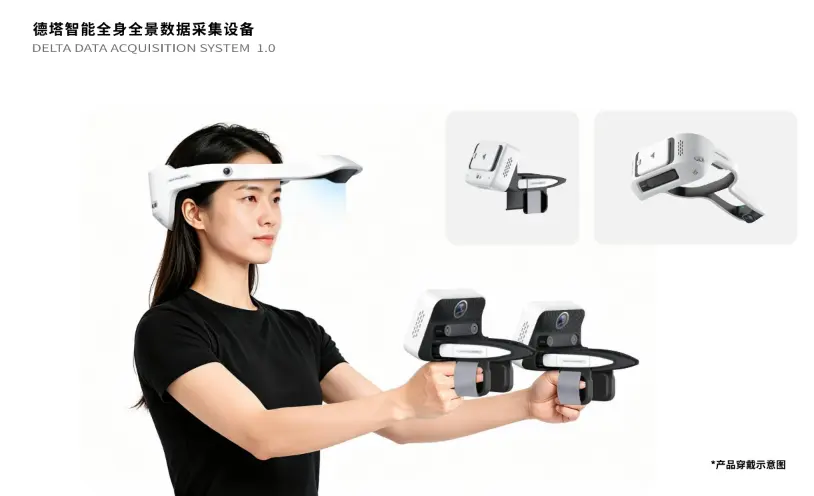
Whole-body panoramic data collection solution
For humanoid robot training, the full-body panoramic data acquisition equipment is shown to simultaneously collect the three-dimensional environment, human body posture, fine hand movements and the entire process of human-object interaction, forming multi-modal data with unified spatial correspondence, providing high-quality data support for robot perception, understanding, operation and whole-body collaborative ability training in home scenes.
02
Humanoid robots work collaboratively throughout the body
For the home environment, it demonstrates the humanoid robot's full-body collaborative capabilities such as walking, turning, bending, squatting, stretching, and operating its arms to autonomously complete tasks such as picking and placing items, sorting and storing, and opening and closing cabinet doors. It can also dynamically adjust its posture according to the space and target location, improving the scope of work, flexibility, and adaptability in complex home scenarios.
03
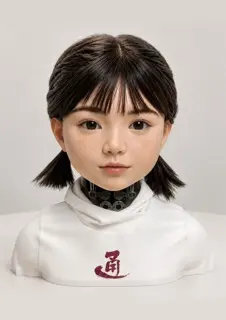
through image
Tongxiang Imago focuses on emotional interaction with humanoid robots. Its core product is the embodied expression head module, subverting the "hardware first, expression later" model. Relying on UV theory and computational inverse design, it uses massive expression data to establish a universal mathematical space, automatically inversely calculates the hardware solution, and outputs anthropomorphic eyes and micro-expressions in 40ms, reducing costs and increasing efficiency. It is used in education, cultural tourism, scientific research, and robotics industries. In the future, it will move from hardware and content output to industry standards and build an intelligent embodied expression standard system.
04
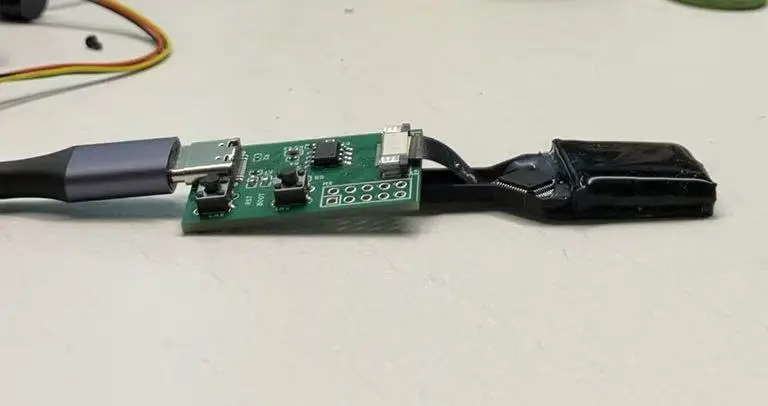
tactile sensor
This exhibit demonstrates a high-performance tactile sensing system for embodied intelligence and dexterous operation of robots. The system is based on cross-physics encoding and decoding technology. Compared with traditional tactile sensors, the system can capture high spatial resolution and high dynamic contact signals, providing more sensitive, stable, and real-time tactile feedback for robots in tasks such as grasping, assembly, sorting, and flexible object manipulation.
05
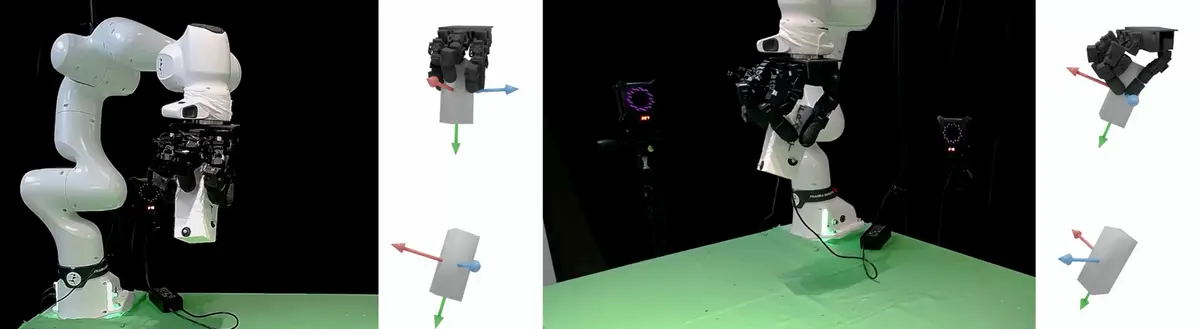
Dexterous hands
The world's first dexterous hand-cerebellar model demonstrates the highly dynamic hand-object interaction capability and establishes a dexterous interaction bridge between the world model and the visual-language-action model and the real physical world. Through the powerful cerebellum ability, the planning ability of the intelligent agent is implemented into the real physical world to complete human-level dexterous operations.
Beijing Institute for General Artificial Intelligence | Company Profile & Products | WRC 2026