Registered Chinese name北京莫刻机器人科技有限公司Beijing Moke Robot Technology Co., Ltd.
Mob (MUKA) is a smart foundation model company that focuses on visual cause and effect world models and works to build a robotic intelligence base that understands the physical wor…
Mob (MUKA) is a smart foundation model company that focuses on visual cause and effect world models and works to build a robotic intelligence base that understands the physical world.
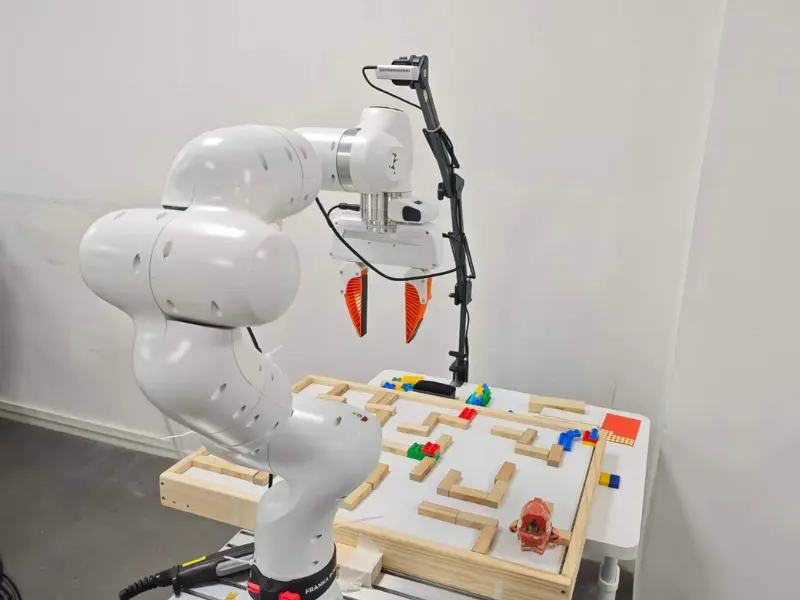
For the first time at this World Robotic Congress, MUKA will publicly present interactive robot Demo based on visual reasoning. The audience is free to change the maze layout, design the game rules, interact with robots in real time, and observe how robots understand the environment, reason the rules and plan their actions through vision.
We believe that the real difficulty of robots is not to complete an action, but to understand the causal relationship in the real world. MUKA aims to move robots from mission to world understanding through robotic primary data and visual cause-effect reasoning, providing a universal base model for the next generation of smarts.
02
MAIN PRODUCTS
Key Products
02 ITEMS
01
Demo-Maze
HDR: Hierarchical Denoising for Vision Reasoning
A new generation of visual reasoning for robotic world models. HDR uses a hierarchical submersible variable and a thin mechanism to enable the model to complete long-term planning, continuous revision and current output during video generation, significantly increasing the success rate in complex reasoning tasks while maintaining a near real-time rate of reasoning.
02
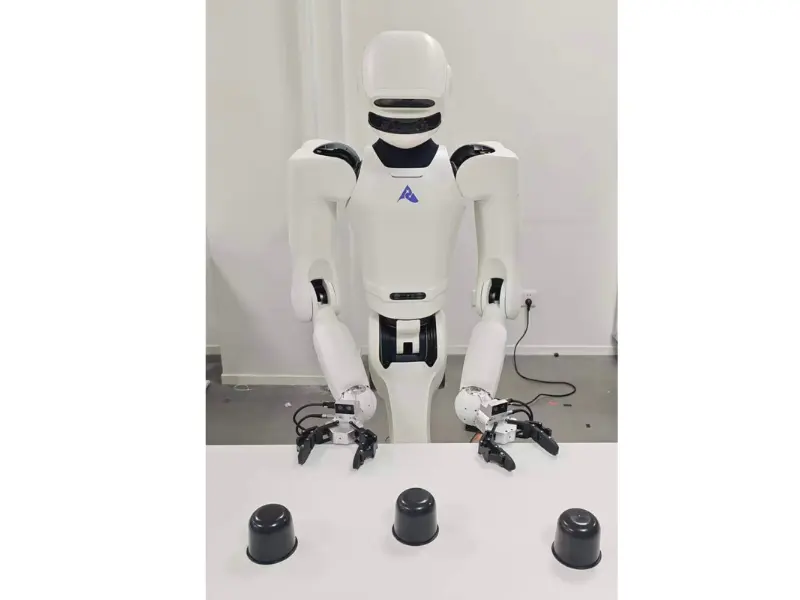
Demo - Looking for a ball
HDR: Hierarchical Denoising for Vision Reasoning
HDR uses a hierarchical submersible variable and a thin mechanism to enable the model to complete long-term planning, continuous revision and current output during video generation, significantly increasing the success rate in complex reasoning tasks while maintaining a near real-time rate of reasoning. A video-world model with low delay and long-term logical consistency is achieved by using the visual reasoning of "planning first, then generation later" of tree-level subvariant.