AIRS, Shenzhen Institute of Artificial Intelligence and Robotics for Society
Registered Chinese name深圳市人工智能与机器人研究院AIRS, Shenzhen Institute of Artificial Intelligence and Robotics for Society
Shenzhen Institute of Artificial Intelligence and Robotics for Society (AIRS) was established in 2019. It is one of the top ten municipal basic research institutions established by…
Embodied intelligence open source system AIRSEAICable repair robotXiaotuan: multi-scenario service robotMagnetic climbing detection robot
Shenzhen Institute of Artificial Intelligence and Robotics for Society (AIRS) was established in 2019. It is one of the top ten municipal basic research institutions established by the Shenzhen Municipal Government relying on the Chinese University of Hong Kong (Shenzhen).
Driven by the needs of enterprises, industries and countries, AIRS focuses on basic theory and original technology research in the fields of artificial intelligence and robotics, promotes the application and transformation of intelligent technology in medical rehabilitation, intelligent manufacturing, urban services and sustainable development, cultivates international talents for national strategic industries, assists high-quality development of enterprises, and creates value for society.
02
MAIN PRODUCTS
Key Products
09 ITEMS
01
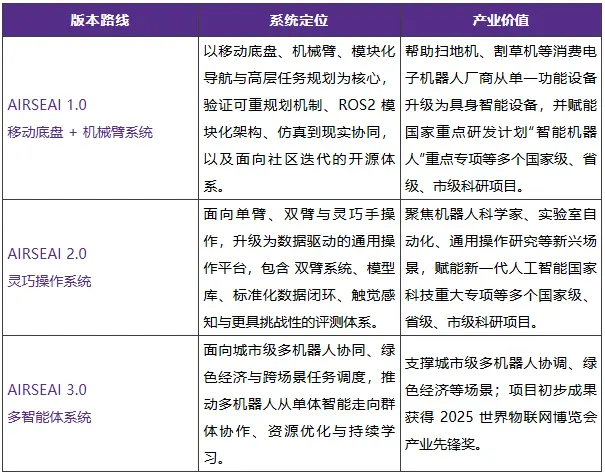
Embodied intelligence open source system AIRSEAI
The AIRSEAI project is committed to building an open source mobile operating platform for embodied intelligence, aiming to bridge the gap between intelligent decision-making and physical execution, and is centered around four cores. Build standardized hardware to achieve decoupling of software and hardware; create a flexible universal algorithm base that is flexibly compatible with various decision-making and operation models; establish a full-link closed-loop pipeline from data collection to training fine-tuning; ensure the stable implementation of the real robot through rigorous benchmark evaluation and virtual and real verification. AIRSEAI provides the industry with a complete set of universal robot solutions that run through "data-algorithm-evaluation-deployment".
02
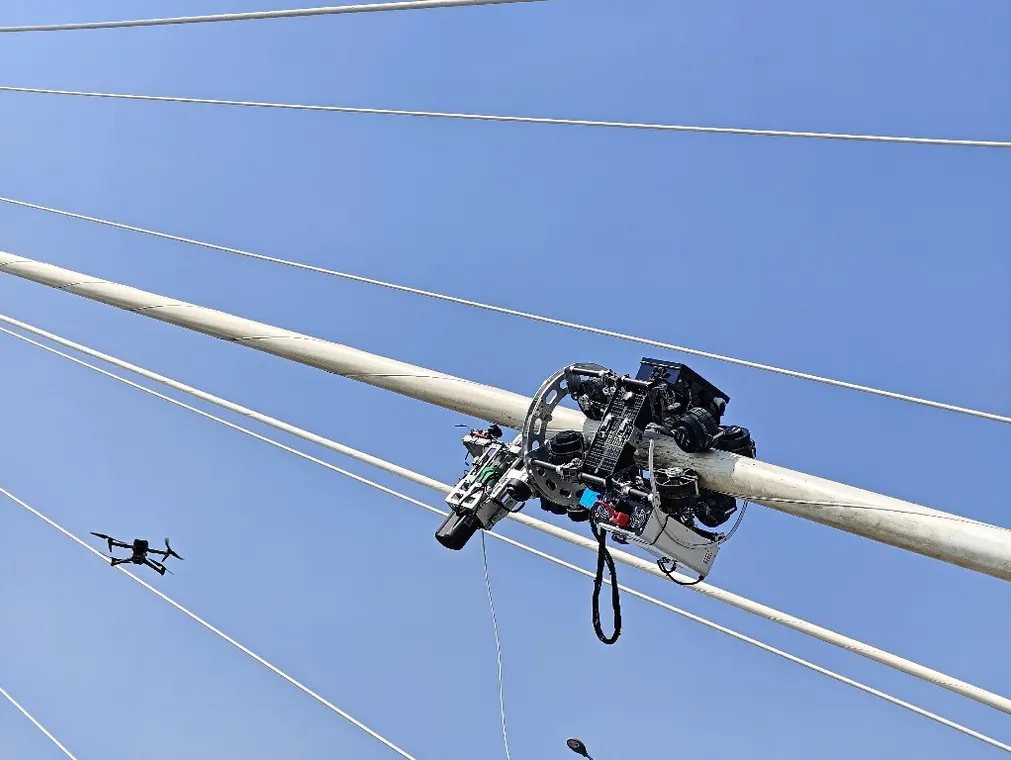
Cable repair robot
The bridge cable repair robot can stably climb along the cable body. It is equipped with a lightweight repair device and a high-definition vision system. It can polish and repair cable diseases and send back construction data in real time. The first "ground control, cloud construction" operation mode to achieve full traceability of the repair process, controllable parameters, and guaranteed quality. For the first time, an integrated closed loop of detection, repair and data management has been constructed, which can not only replace high-risk manual high-altitude operations, but also deal with diseases that are inaccessible by humans, providing a full-process solution for bridge cable maintenance.
03
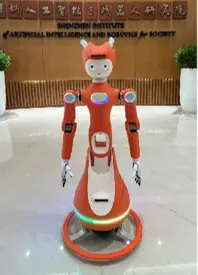
Xiaotuan: multi-scenario service robot
The spherical robot (Xiaotuan) is a mobile operating robot that integrates single-ball balance, bionic limbs and multi-sensory integration. It breaks through the limitations of traditional wheels and achieves omnidirectional zero-dead-end movement in a small space, with silent and gentle operation. Equipped with bionic arms and a multi-degree-of-freedom waistband, the working posture can be flexibly adjusted to achieve precise grasping and multi-perspective perception. Integrated lidar and depth camera, with independent modeling, intelligent obstacle avoidance and path planning capabilities. Built-in large model interaction, capable of guiding, explaining and welcoming guests. The whole machine has a modular design, compact structure, and has both cutting-edge technology and practical value.
04
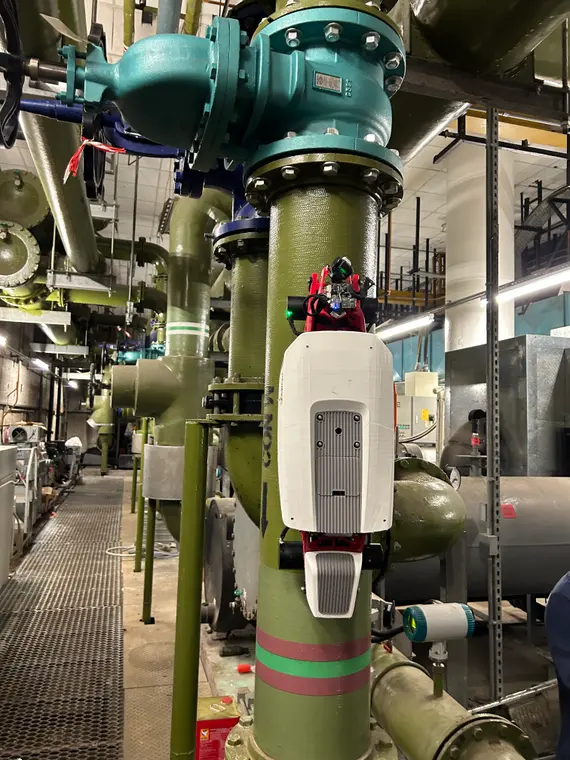
Magnetic climbing detection robot
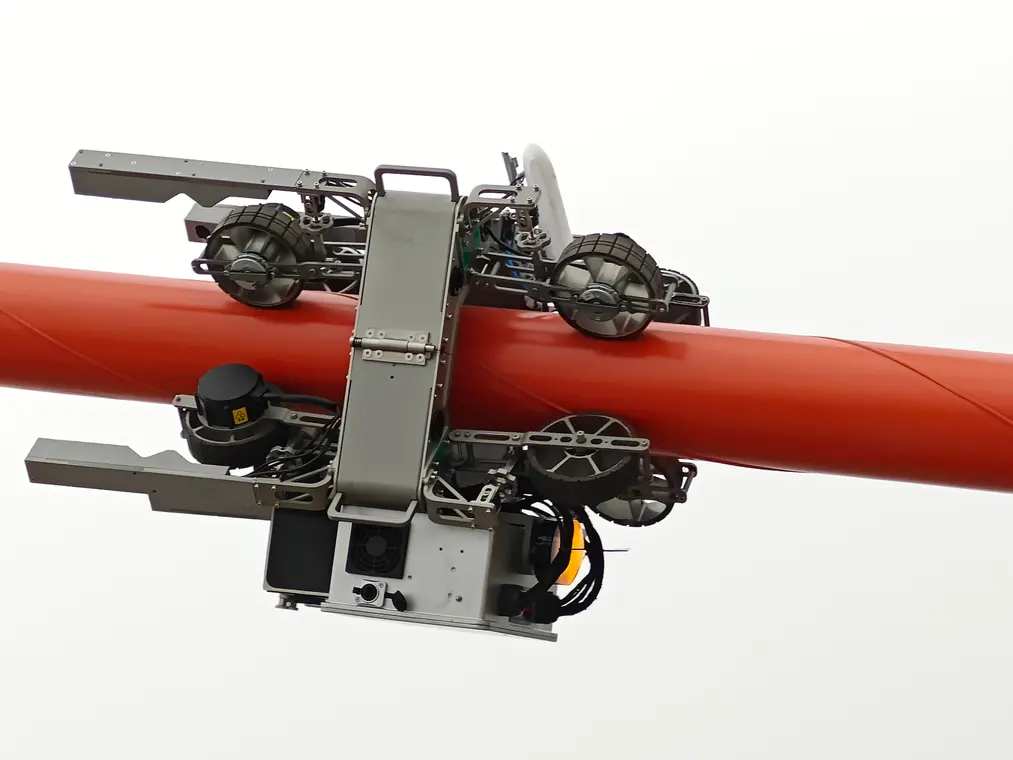
The magnetic climbing inspection robot is specially developed for inspection of corrosion on the outer walls of chemical and power steel pipelines. It integrates active demagnetization, permanent magnet adsorption, two-wheel omnidirectional drive and multi-joint obstacle-crossing technology, which can achieve multi-position stable crawling and intelligent identification of pipe wall defects, effectively replacing high-risk manual inspections. The three-section split design of the fuselage is suitable for multi-curvature pipes and can smoothly span flange bulges; it is equipped with 5G image transmission, laser ranging and lightweight AI detection model. The whole machine adopts a lightweight modular structure of carbon fiber and aluminum alloy, which is easy to disassemble and assemble. It supports dual-end control with handheld remote control and AR glasses, and has both high reliability and industrial practicality.
05
Series 7-axis force haptic system device
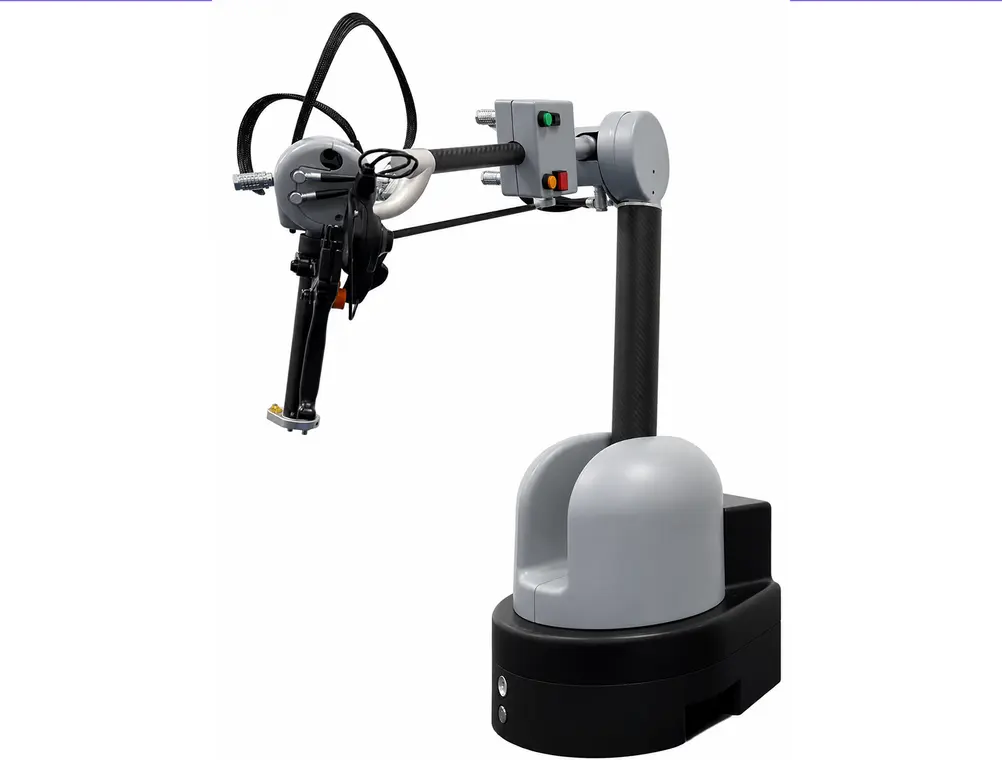
The professional-grade 7-degree-of-freedom force feedback interaction platform supports active force and torque output, gravity compensation and compliance control, and provides industrial-grade reliable interactive interfaces for real machine data collection, scientific research, medical training, virtual assembly, and robot teleoperation.
06
Force feedback dual-arm robot
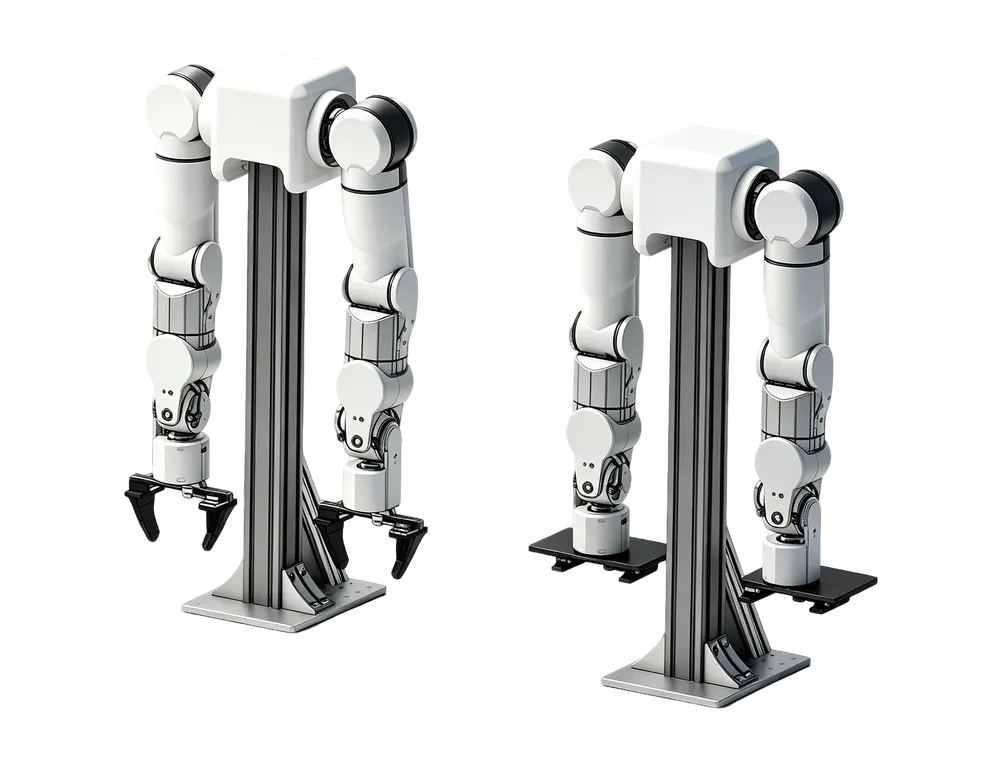
The open source dual-arm collaborative control solution supports real-time bilateral force feedback, dual-arm coordinated operations and remote teleoperation. It is suitable for physical AI research, flexible assembly, and human-machine collaboration in complex scenarios, taking into account both openness and engineering implementation.
07
Visics self-developed universal body model
The VLOA large model is Roboscience's general large model of embodied intelligence. The upper layer is a world model responsible for cognition and object trajectory deduction. It is combined with the lower layer operation model and uses 3D object trajectory as the interface to allow the robot to understand the physical world, watch, deduce, and act at the same time, and ultimately complete complex and sophisticated operation tasks.
08
Electric humanoid robot
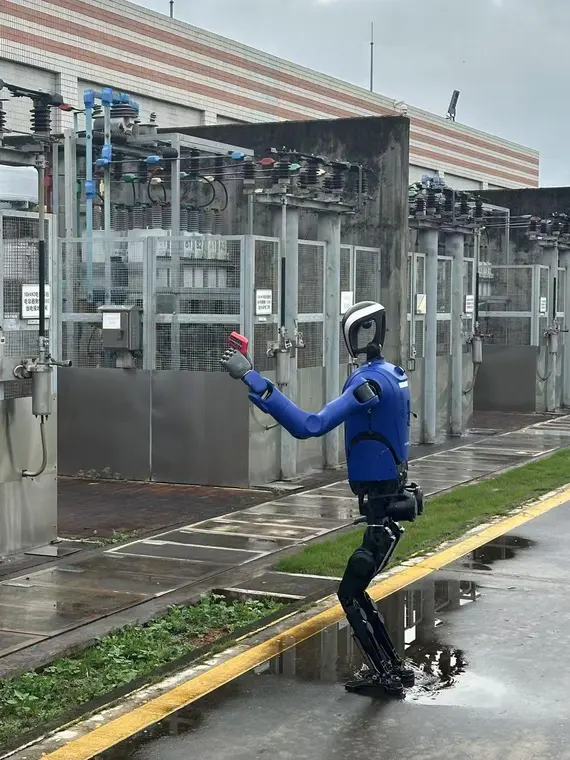
The mobile level supports autonomous map guidance and obstacle avoidance, stable walking on uneven roads such as grass and stairs, and can cross 20cm obstacles; the perception level supports 22 types of AI recognition in six categories: equipment defect detection, infrared temperature measurement, mark recognition, knife gate status, and personnel behavior; the operation level can complete tasks such as opening and closing cabinet doors, buttons, rotary switches, and arranging safety barriers. Meet the needs of multiple business scenarios for power operation and maintenance.
09
Stay cable inspection robot
The cable inspection robot is a robot designed to detect defects in the apparent PE protective layer of cable-stayed cables or cables of suspension bridges and arch bridges. It can automatically identify and locate cable-stayed diseases, and the robot automatically transmits the collected pictures to the remote end in real time for analysis. Operators can control and operate three pieces of equipment on-site, which is low-cost and highly efficient. Later improved models can realize magnetic flux leakage detection, automatic repair, cleaning and other functions. At present, this type of equipment has completed the inspection tasks of nearly 30 bridges.
AIRS, Shenzhen Institute of Artificial Intelligence and Robotics for Society | Company Profile & Products | WRC 2026